
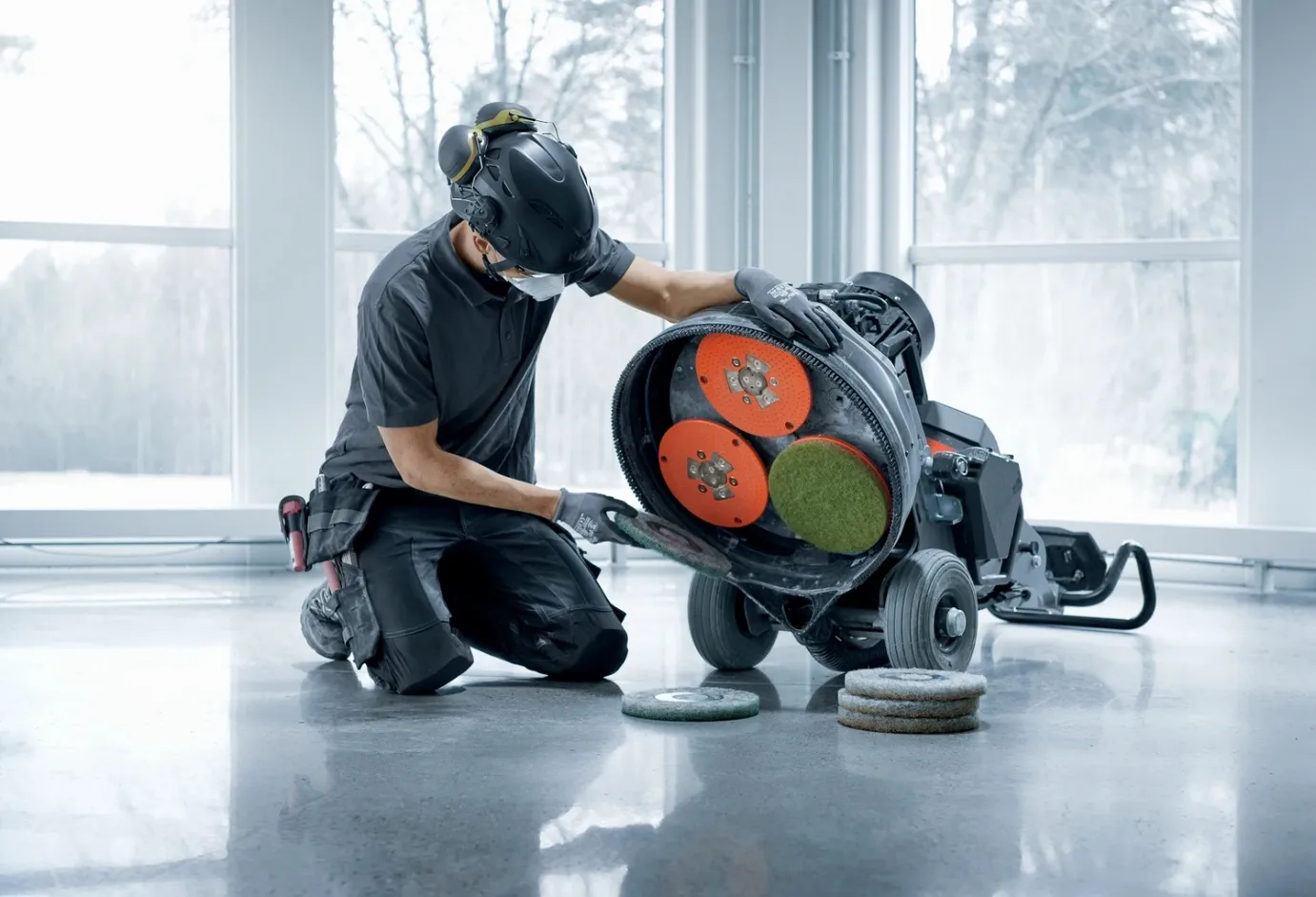
Behind every smooth finished floor sits a bench of tools, each chosen for a specific task. Anyone gathering epoxy supplies los angeles contractors depend on should understand what each item does, because the wrong tool can ruin the best product. This article walks through a typical job in order, from first grinding pass to final topcoat.
Surface Preparation Equipment
The grinder is the heart of the process. Planetary machines with multiple heads cover large areas quickly, while handheld units reach edges and corners. Both attach to dust extractors that capture fine particles.
A quality vacuum matters as much as the grinder. Fine dust left on the slab spoils adhesion, and unfiltered air is unhealthy to breathe. Invest in proper filtration, and empty collection bags before they overflow.
Choosing Diamond Tooling
Tool selection depends on the concrete and the coating being removed. Soft slabs need hard bonds, and hard slabs need soft ones, so crews carry a range. Using the wrong bond burns segments or leaves poor texture.
For fine finishing, a z grit disc los angeles installers favor can refine scratch patterns and prepare surfaces for thin coatings. Pay attention to grit numbers and compatibility with your machine, then test on a small area before committing to the whole floor.
Repair and Patching Tools
Cracks and spalls require chasing tools, putty knives, and mixing buckets for fillers. A crack chaser opens hairlines, so repair material penetrates deeply. Backer rod and flexible sealants handle moving joints.
Keep spare blades, trowels, and mixing paddles on hand. Repair work is slower than it looks, and a small supply issue can halt an entire day. Prepare the repair kit before the crew arrives.
Mixing and Measuring
Accurate ratios determine success. Use graduated containers, scales, or calibrated pumps to measure components precisely. Guessing leads to soft, tacky floors that never cure.
A drill with a mixing paddle blends material thoroughly, scraping the sides to avoid unmixed streaks. Transfer to a fresh bucket before spreading, a technique known as boxing, which prevents unmixed material from reaching the floor.
Application Tools
Squeegees spread material evenly, notched ones control thickness, and rollers finish the surface. Different nap lengths suit different products, and low-lint covers prevent fibers from marring clear coats.
Spiked shoes allow crews to walk on wet material while broadcasting flakes or aggregates. Brushes cut in along walls and around fixtures. Keep spares for every tool, since the clock is always ticking.
Safety and Personal Protection
Respirators with the correct cartridges, chemical-rated gloves, eye protection, and coveralls are non-negotiable. Resins can sensitize skin, and solvents can harm lungs.
Establish ventilation before opening containers. Keep safety data sheets on site, and know emergency procedures. Safety is not a cost; it is what keeps skilled people working for years.
Cleanup and Tool Care
Wipe tools before material hardens. Dispose of used rollers and cups according to local rules, and never pour liquid components down drains. Clean grinding equipment and empty dust tanks after every job.
Inspect tools regularly. Worn diamonds, cracked pads, and bent squeegees reduce quality. Replacing them on schedule protects results and avoids wasted material.
Building Your Own Kit
New contractors can start with essentials and expand as work grows. Buy quality where it matters most: grinders, vacuums, and respirators. Cheaper consumables suit low-risk tasks.
Record what each job uses and where tools failed. Over time, a refined kit emerges, matched to your style and the projects you most often undertake.
Conclusion
A professional floor job relies on thoughtful tool choices: proper grinding gear, suitable tooling, repair supplies, accurate mixing equipment, application tools, and safety protection. Maintain and refine your kit, and every project becomes smoother and more predictable.
To explore products and get practical advice, visit whatittakesla.com and speak with the team.
